
Inner-tube compound and grade: Pending written factory confirmation.
Custom hose assembly solution
Rubber-Core Stainless Steel Braided Hose
Custom hose assemblies reviewed against the conveyed medium, pressure, temperature, movement and end connections.
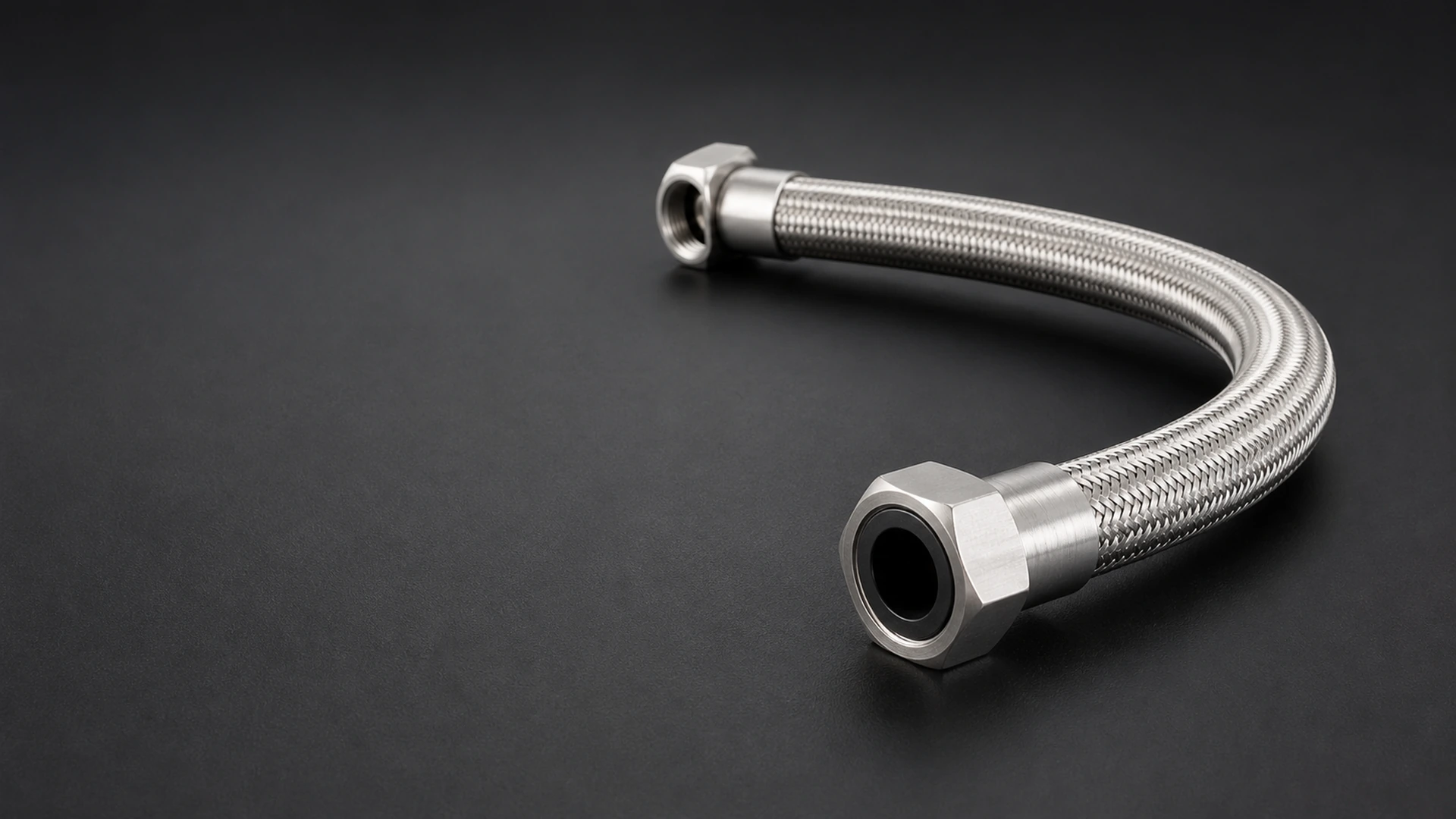 Application concept / illustrative visual
Assembly structure
Build the Specification From the Inside Out.
The inner-tube compound, braid construction, hose size and fitting method must be selected for the actual application. Pending written factory confirmation.
Stainless steel braid material, wire construction and layer count: Pending written factory confirmation.
External cover or guard is selected only when the installation requires it and after written confirmation.
End fittings and attachment method are defined from the approved End A / End B interfaces.
Family-specific buyer questions
Resolve the Questions That Change This Assembly.
Use these prompts to prepare the inquiry. They do not pre-confirm a construction or capability.
Which medium and cleaning fluids must the inner-tube compound be reviewed against?
What normal pressure, peak pressure, pulsation or impulse pattern belongs to the installed duty?
Does the route create vibration, repeated flexing, rubbing or a need to review a cover or guard?
What do the visible braid, ferrule, End A and End B interfaces look like, and which dimensions can be measured?
Approved product-family visual
Review the Visible Assembly Features.
Only matching product-series visuals from the latest owner-approved machine manifest are shown.
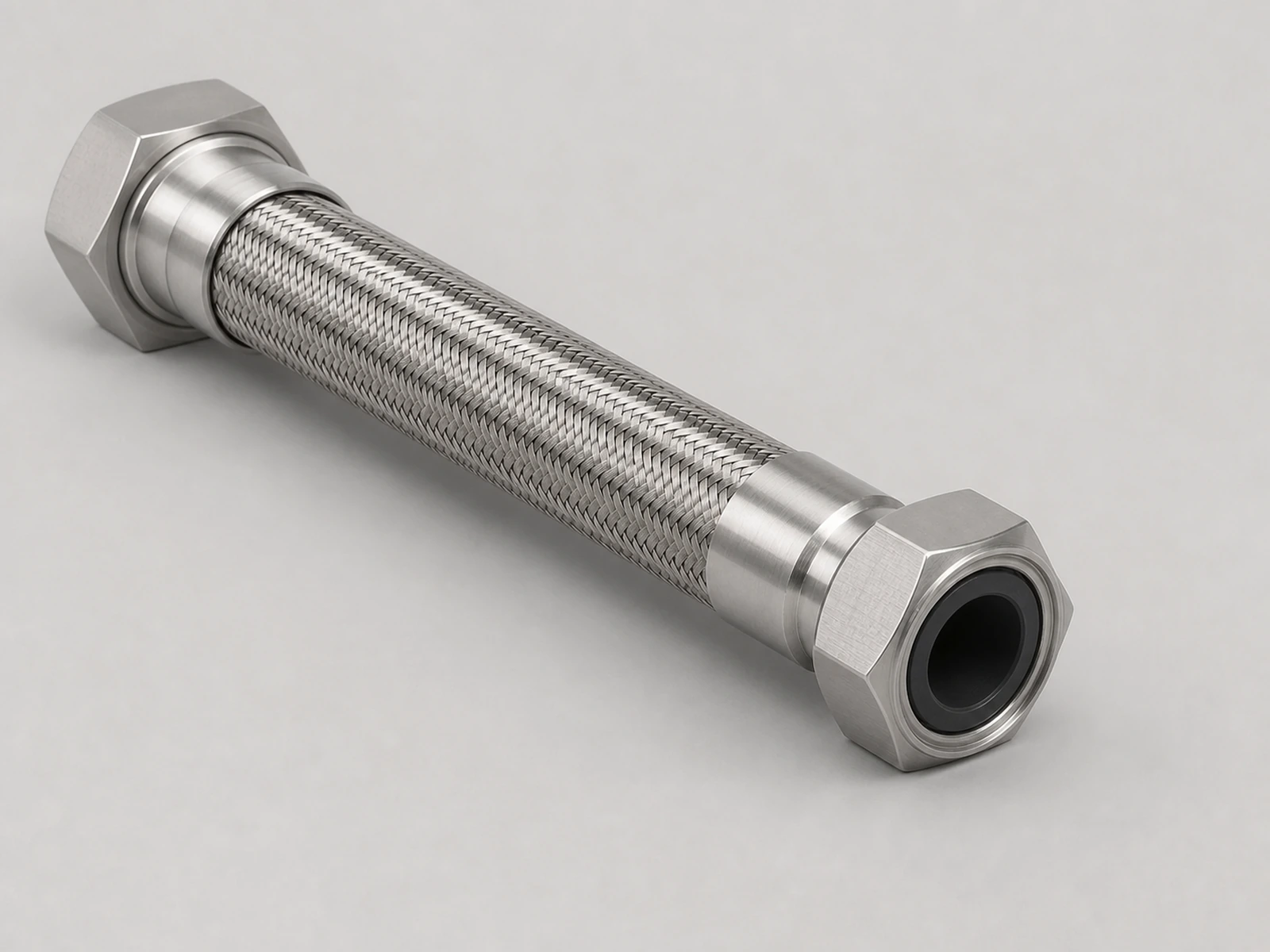 Application concept / illustrative visual
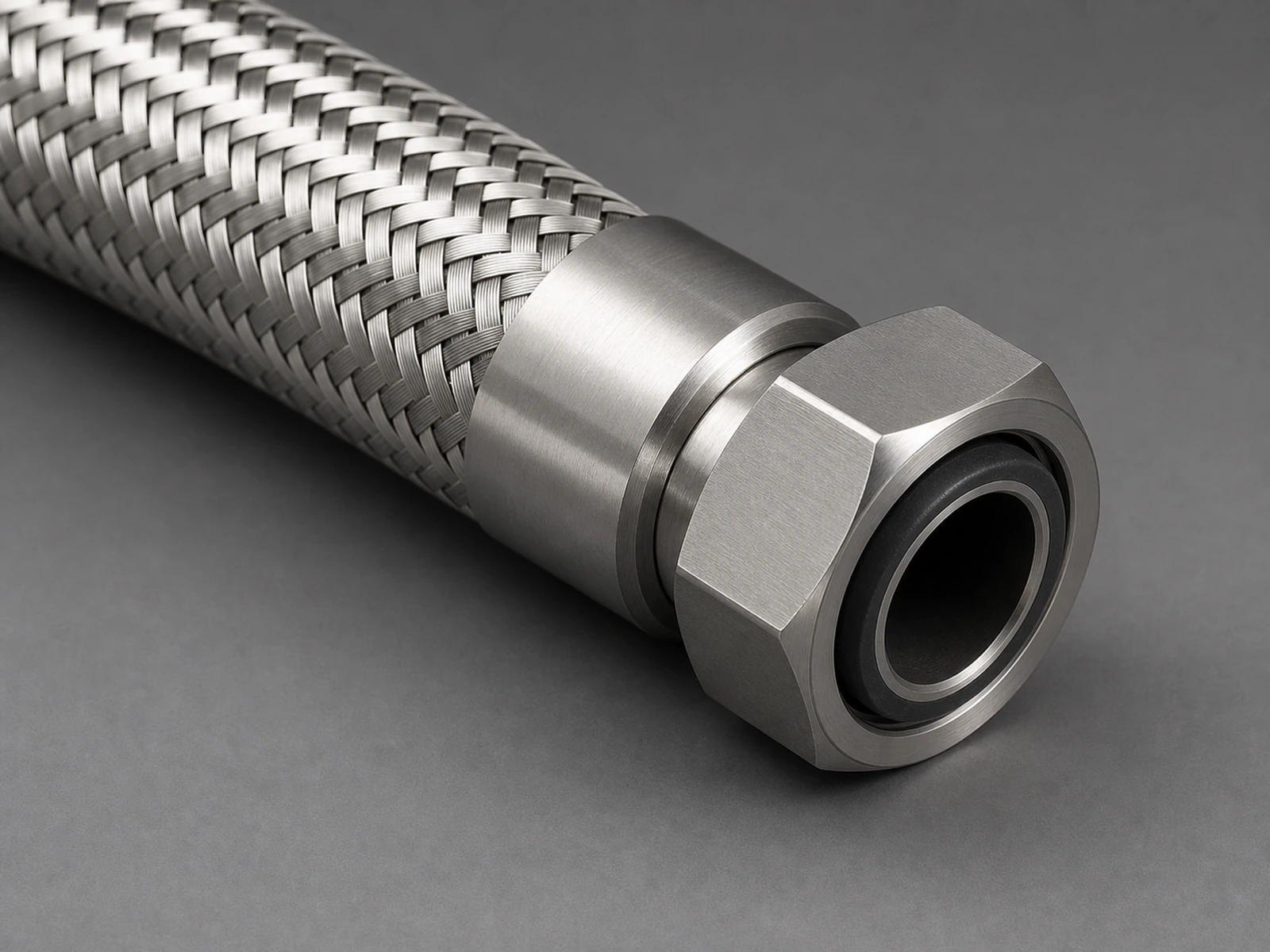 Application concept / illustrative visual
Design directions
Translate the Duty Into Four Review Questions.
These are selection directions, not published Aureko ratings.
High-pressure duty review — pulsation inputs
Record normal and peak pressure plus cycle, pulsation or impulse behavior; the complete assembly rating still requires written confirmation.
High-temperature duty review — compound inputs
Record fluid, ambient and cleaning temperatures so the required inner-tube compound can be reviewed.
Corrosion and compatibility review — inner tube and exterior
Identify the medium, concentration, cleaning fluid and external atmosphere without assuming compatibility.
Abrasion or external-protection review — installed route
Show rubbing, impact and routing constraints before any cover or guard is included in a written proposal.
Applications
Use the Installation to Define the Assembly.
- Suitability is reviewed from the actual medium, duty, movement, interfaces and installation; an application name alone is not an approval.
- A visual, sample or previous part can support identification but cannot prove material, performance, compatibility or certification.
Review sequence
Move From Field Evidence to One Written Basis.
The sequence differs by product family because the uncertain interfaces differ.
- 01Describe the duty
Record medium, pressure cycle, temperature range, movement and external exposure. - 02Define the rubber-core requirement
State a required compound only when known; otherwise provide the duty for written review. - 03Identify both ends
Measure End A, End B, sealing faces, orientation, hose length and available routing space. - 04Approve one written assembly basis
Use the confirmed construction, drawing, test and document scope as the quotation basis.
Custom options
Define End A, End B and the Hose Between Them.
Hose DN/ID or size, usable length, overall length and tolerance.
Required inner-tube compound, braid and any external protection.
End A and End B type, size, material, sealing face and orientation.
Quantity, marking, packing, drawing, test and document requirements.
RFQ checklist
Send These Inputs for a Useful Review.
Photos and drawings help identify interfaces. Written fields define the quote basis.
- 01Conveyed medium, concentration and cleaning method where applicable.
- 02Normal and peak pressure, vacuum or pulsation, plus minimum and maximum temperature.
- 03DN or inner diameter, usable length, overall length, tolerance and quantity.
- 04Movement condition, installation route, available space and external environment.
- 05End A and End B type, size, standard, sealing face, material and orientation.
- 06Required drawing, test method, acceptance record, marking, packing and documents.
Inquiry photo brief
Photograph the Interfaces That Words Miss.
- One full assembly photo showing hose route, braid, ferrules and both ends.
- One close photo of End A beside a ruler or caliper reading.
- One close photo of End B, including the sealing face and any visible marking.
- One installed-view photo showing bend, vibration source, rubbing points and available space.
Written confirmation boundary
Specific materials, pressure, temperature, compatibility, assembly method, tests, certifications and document availability remain Pending written factory confirmation for the order-specific construction.
Product FAQ
Clarify the Assembly Before Quotation.
Confirm the inner-tube compound, braid, medium, pressure, temperature, movement and installation conditions in writing.
Confirm End A and End B type, size, thread or flange standard, sealing face, material and orientation.
Confirm the required drawing, test, inspection, marking and traceability documents before quotation or production.